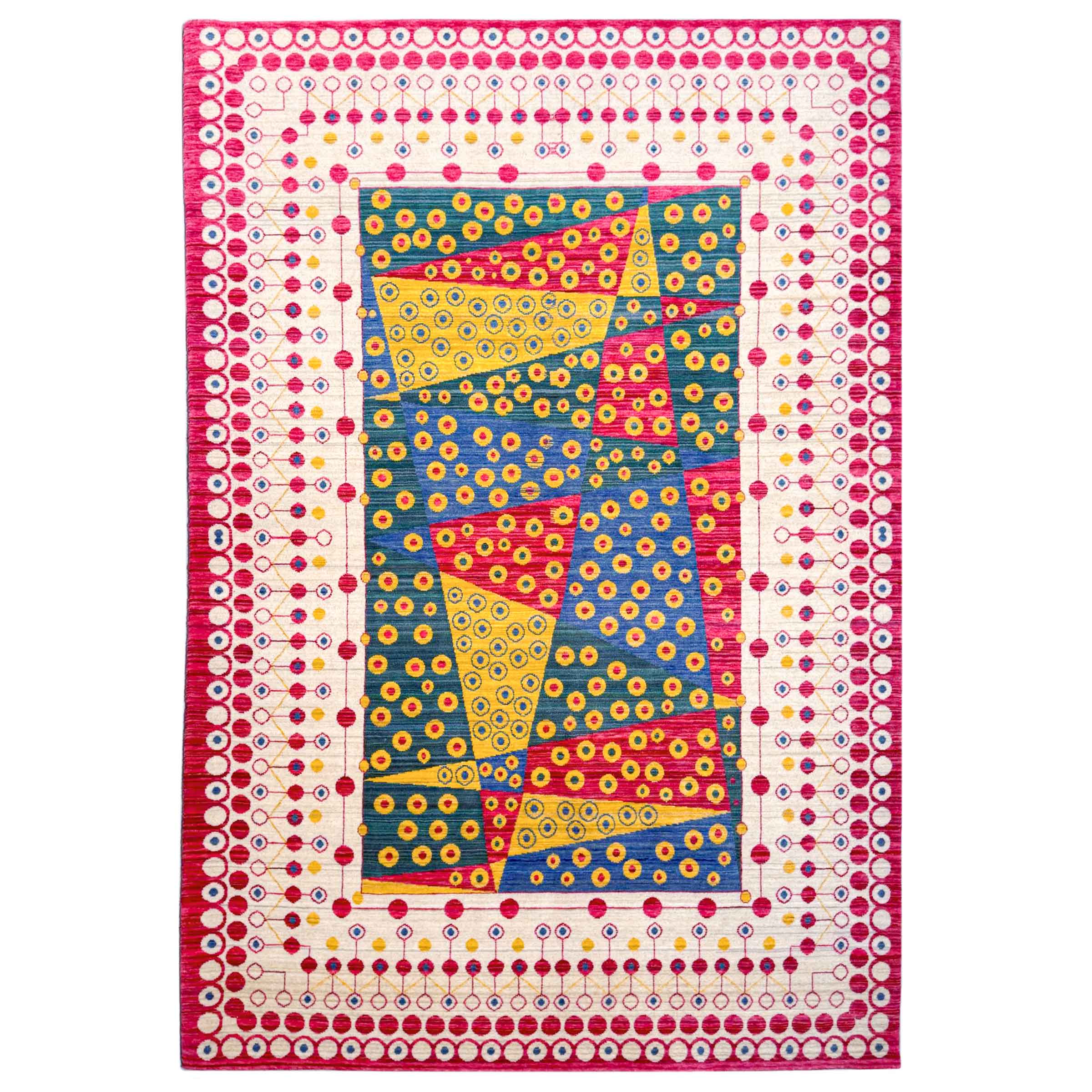
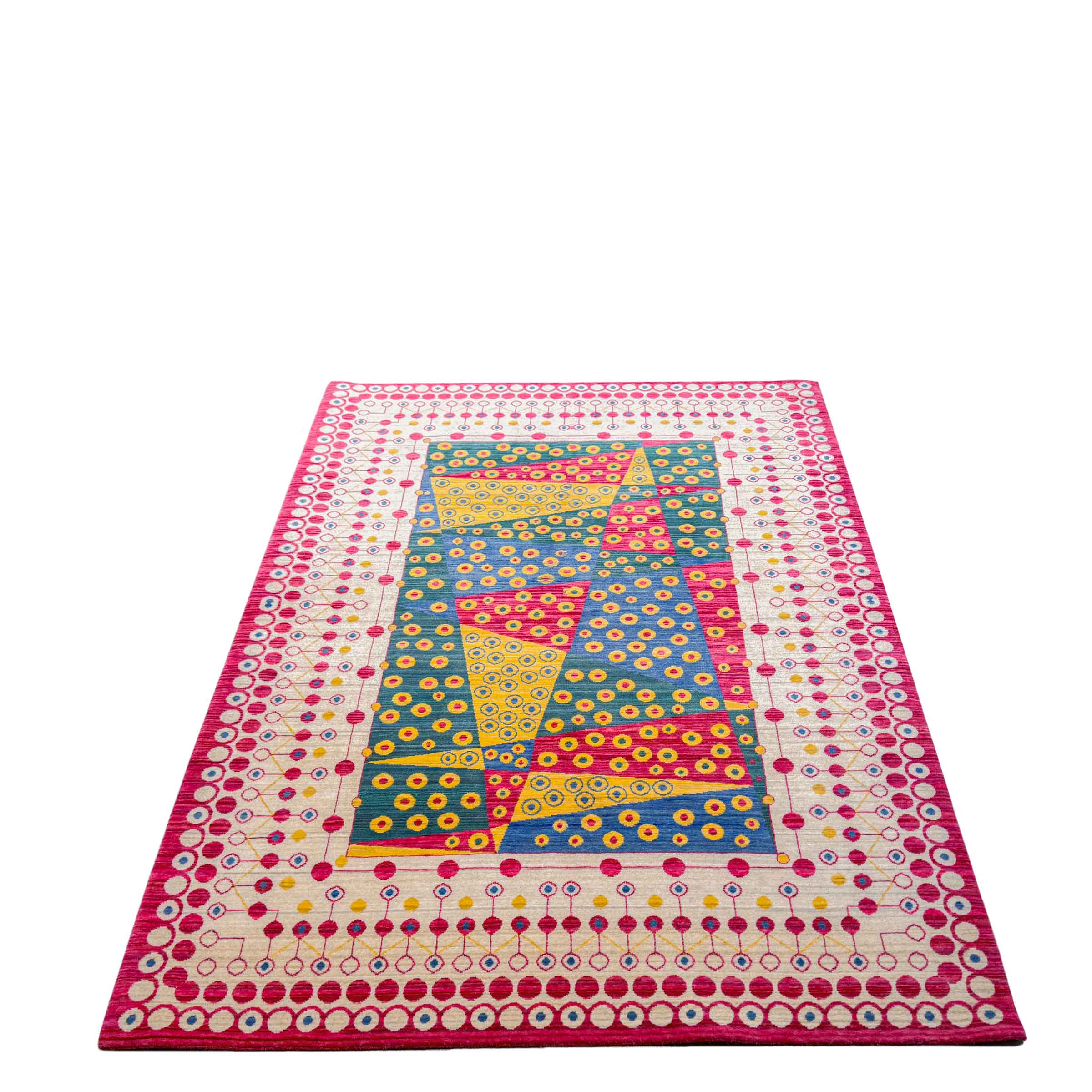
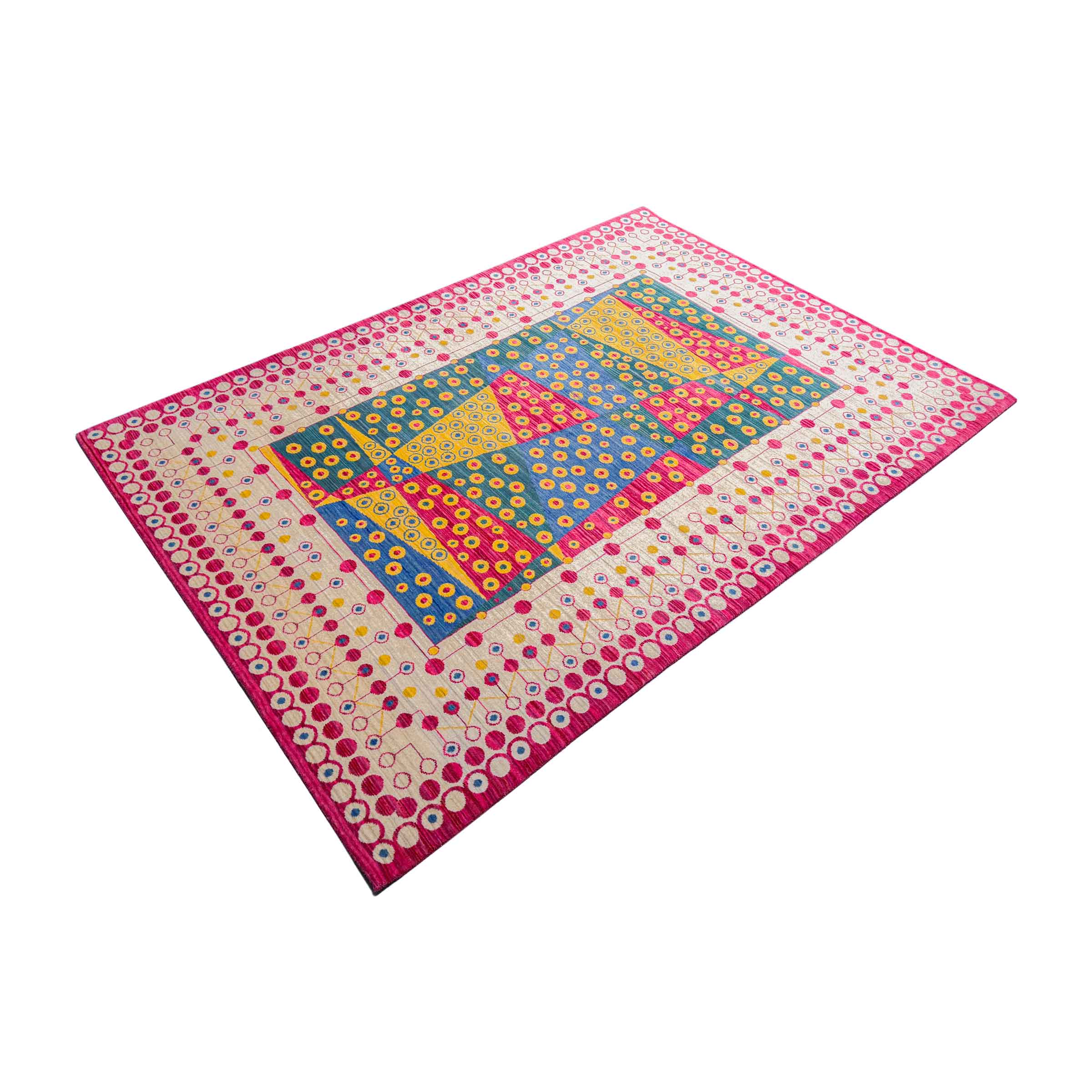
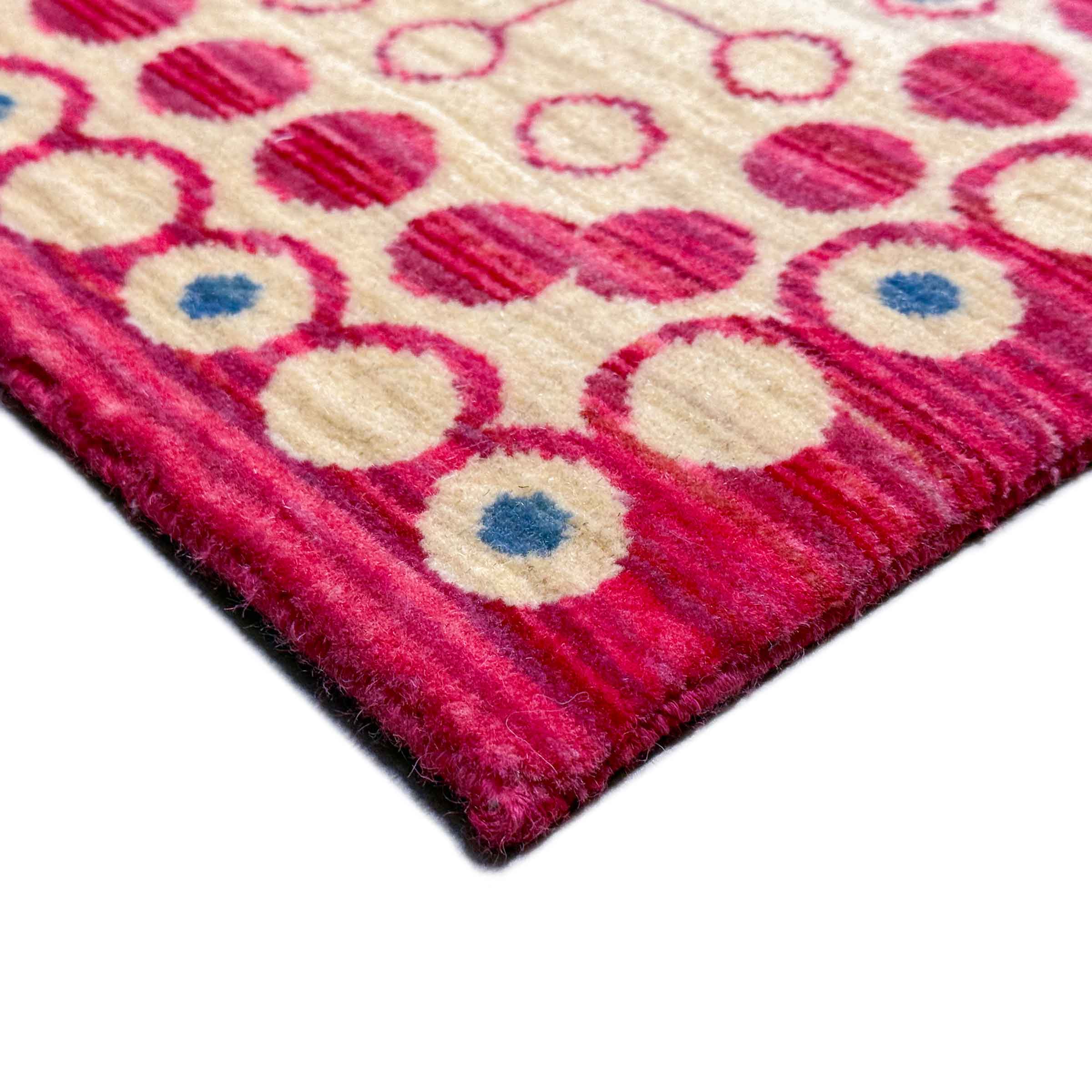
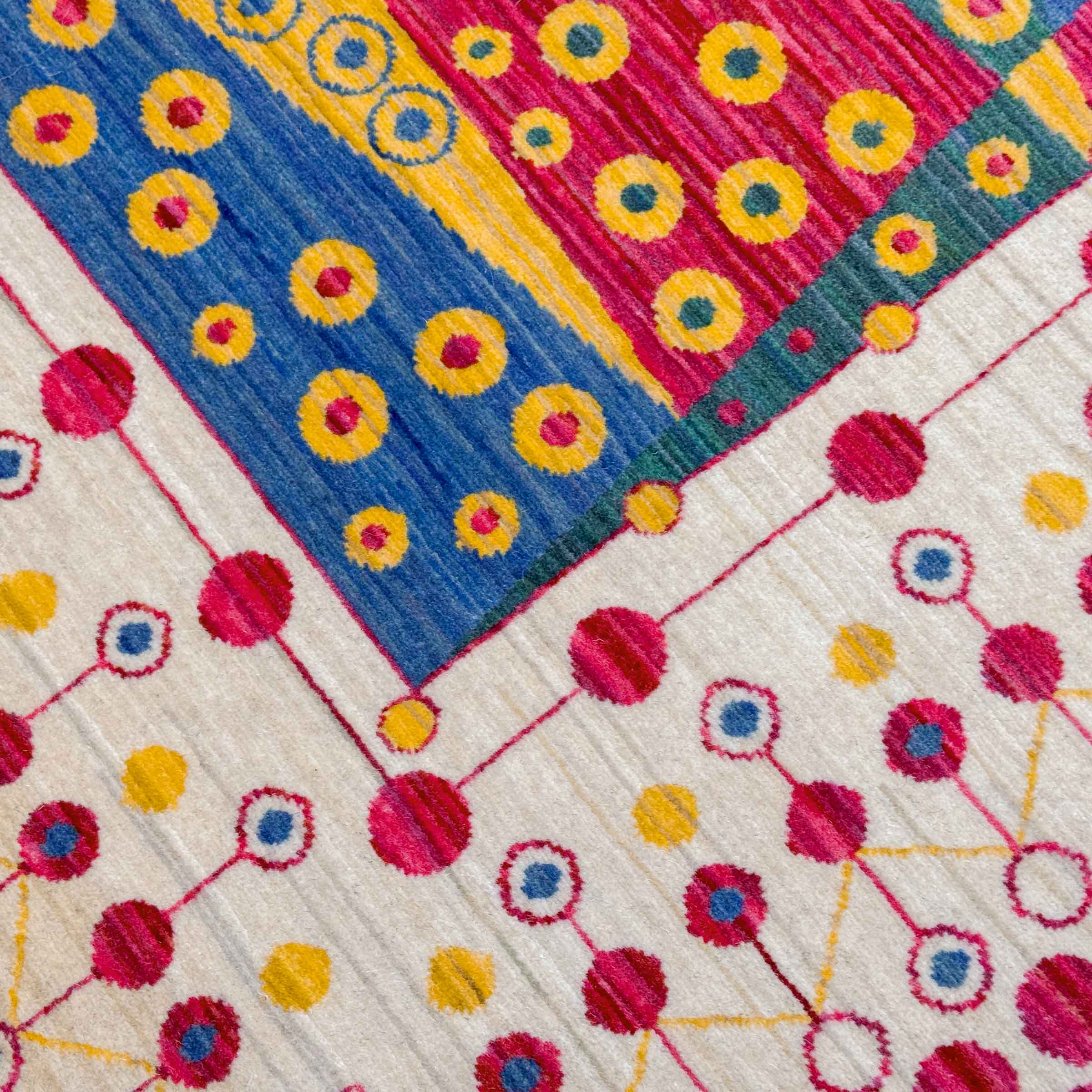
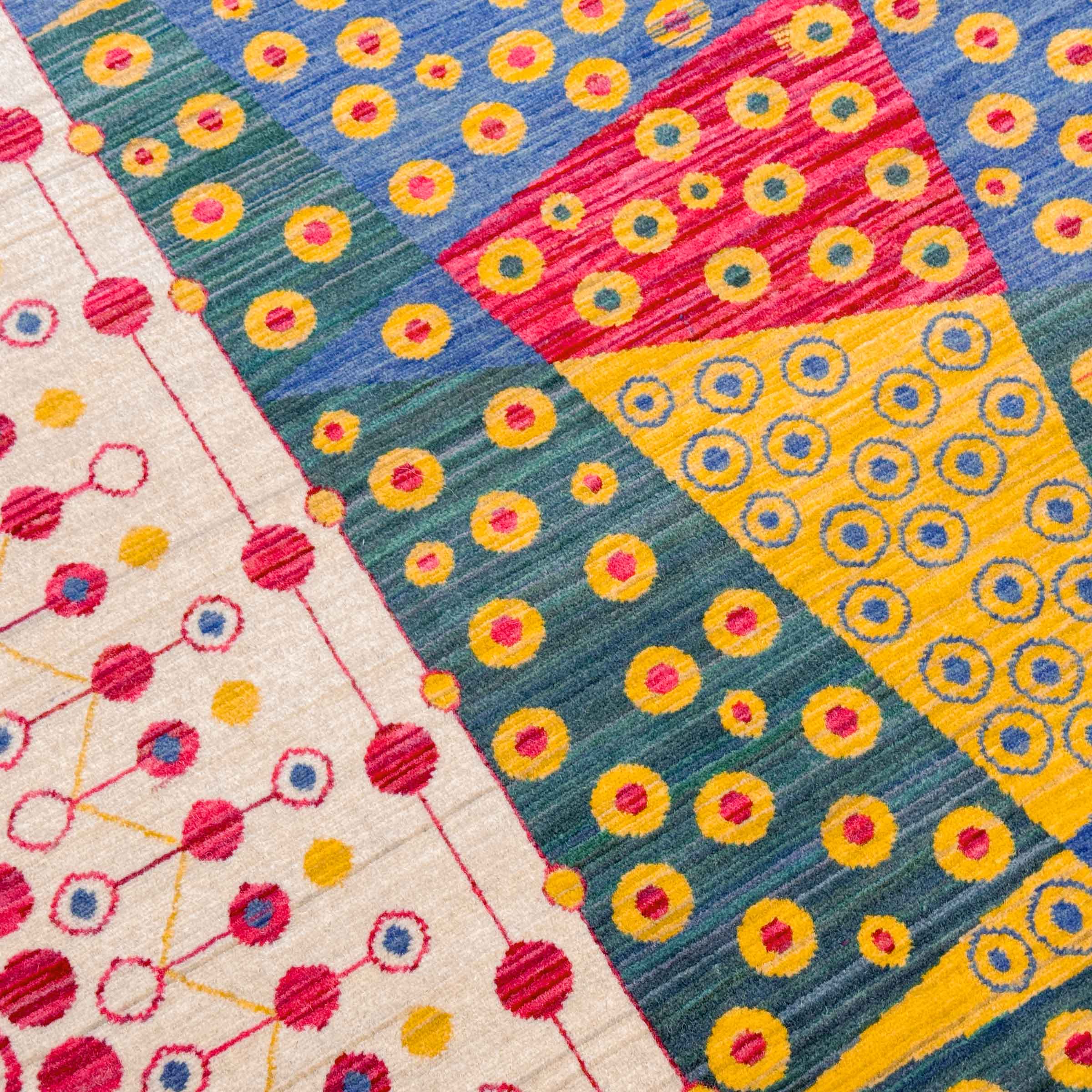
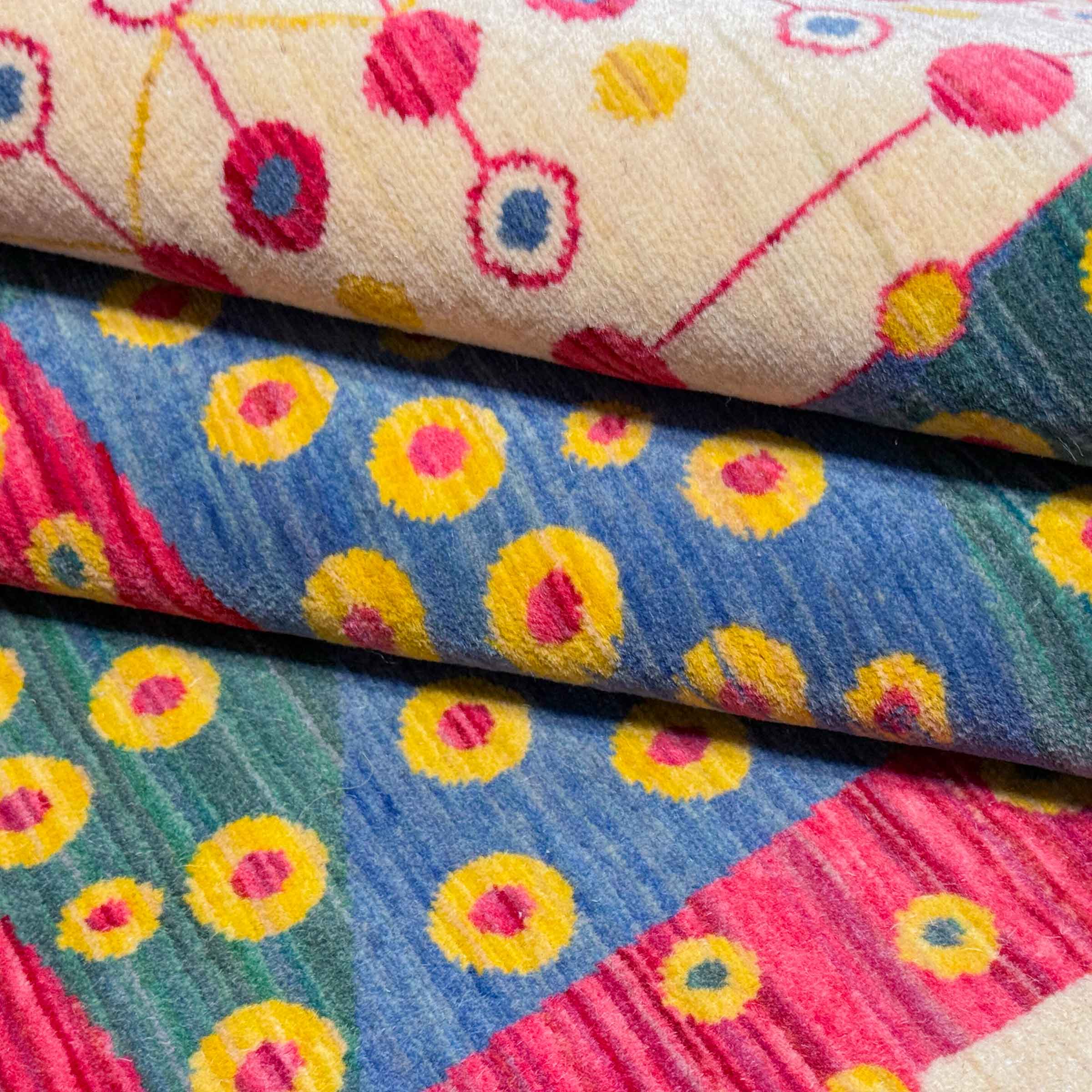
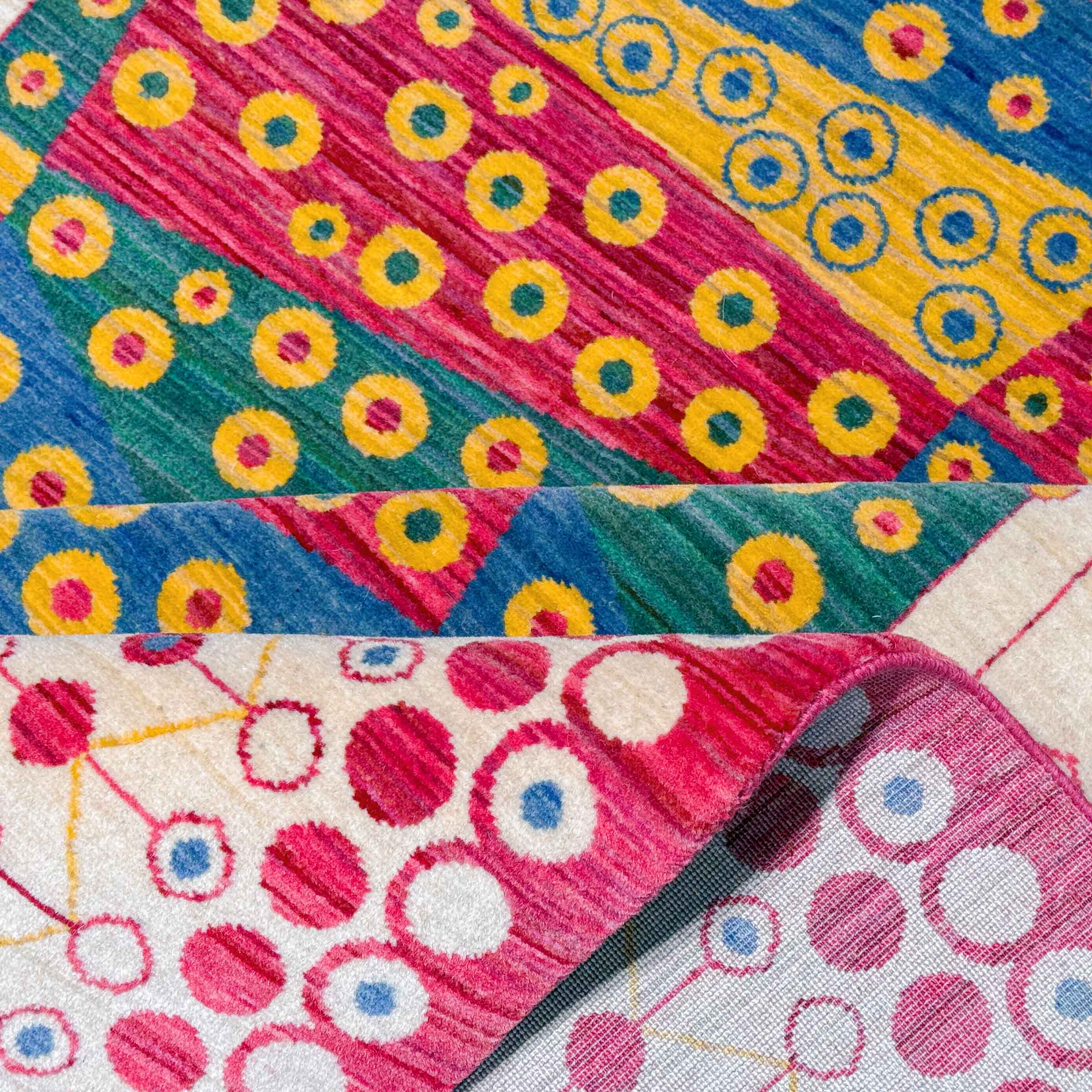
In this collection, tradition and modernity engage in a dialogue woven into the very fabric of the carpet a fusion of cultural memory and contemporary vision that not only revives the past but redefines it for the future.
These carpets are no longer mere floor coverings; they are poetic expressions of identity, time, and aesthetics.
Each piece is a visual narrative a journey through mountains, plains, and the imaginative mind of the artist.
This collection draws inspiration from contemporary design styles of Central Asia, a region whose aesthetics have shaped a new approach to carpet design.
At the heart of the designer’s vision lies the idea of modernizing traditional motifs transforming them through a fresh lens into forms that are both unique and striking.
By referring to books on the history of carpet art, one can discover nomadic rugs rich with intricate geometric patterns. Carpet weaving in Central Asia has deep roots in nomadic cultures that have flourished in the region for centuries. These rugs were not purely decorative; they served practical purposes providing warmth, insulation, and even functioning as room dividers in portable homes like yurts. The geometric patterns found in ancient nomadic rugs may reflect tribal identities and the cultural symbols of their weavers.
The beauty of this style comes to life when placed within minimalist or Art Deco-inspired interiors, breathing a fresh spirit into the space around you.
It is important to remind that all carpets in this collection are woven from Iranian wool fibers using the Abrash dyeing method ; all carpets are washed by hand in a traditional way after the weaving stage, and all the stages related to Selvage and Shearing is done by hand and then the carpets are placed under sunlight for a long time, this process has been one of the traditional finishing stages of woven carpets.
در این مجموعه، سنت و مدرنیته در تار و پود فرش به گفتوگو نشستهاند؛ تلفیقی از حافظهی فرهنگی و نگاه امروز، که نه تنها گذشته را زنده میکند، بلکه آن را برای آینده بازتعریف میسازد.
فرشهایی که دیگر فقط کفپوش نیستند، بلکه بیانی شاعرانه از هویت، زمان، و زیباشناسی هستند. هر قطعه، روایتیست بصری از سفری میان کوهها، دشتها و ذهن خیالپرداز هنرمند. این کلکسیون، نشأتگرفته از سبک طراحی معاصر در آسیای مرکزی است؛ سبکی که به خلق شیوهای نو در طراحی فرش انجامیده. ایدهی اصلیای که در پسِ ذهن طراح وجود داشته، مدرنسازی موتیفهای اصیل بوده است؛ موتیفهایی که با نگاهی تازه، به نقوشی متفاوت و بدیع تبدیل شدهاند.
با مراجعه به کتابهای تاریخ هنر فرشبافی، میتوان فرشهای عشایریای را مشاهده کرد که در آنها از نقوش هندسی پیچیده بهره گرفته شده است. قالیبافی در آسیای مرکزی، ریشه در فرهنگهای عشایری دارد که قرنها در این منطقه رواج داشتهاند. این فرشها صرفاً جنبهی تزئینی نداشتهاند؛ بلکه کارکردی عملی نیز داشتهاند: تأمین گرما، عایق بودن، و حتی نقش تقسیمکنندهی فضا در خانههای قابل حمل مانند چادر. طرحهای هندسی در فرشهای کهنِ عشایری، ممکن است بازتابدهندهی هویت قبیلهای و نمادهای فرهنگی بافندگان آن باشند.
جذابیت این سبک، زمانی بهخوبی نمایان میشود که در فضایی با دکوراسیون مینیمال یا طراحی آرتدکو قرار گیرد؛ جایی که بتواند روحی تازه به محیط زندگی شما ببخشد.
فرشهای این کلکسیون از الیاف پشم ایرانی با شیوه رنگرزی ابرش بافته شدهاند. پس از بافت، هر فرش بهصورت سنتی شستوشو میشود و تمامی مراحل مربوط به شیرازهزنی و پرداخت سطح فرش با دستان توانای استادکاران خبره، انجام میگیرد.